
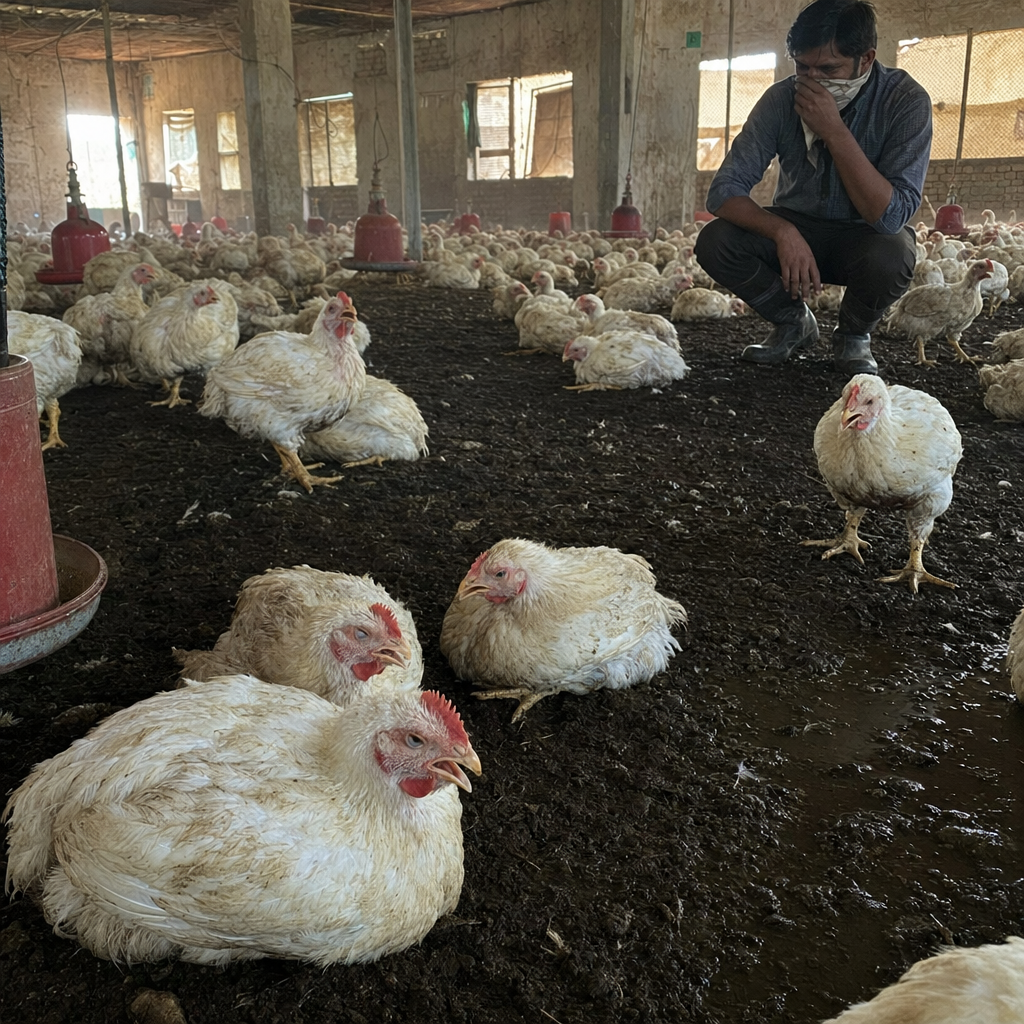
A bad-smelling chicken pen is not just unpleasant, It is often a warning sign that something inside your poultry house is already working against your birds.
When droppings mix with wet litter, poor airflow, and heat, ammonia starts building up. That sharp smell many farmers ignore is not just annoying to visitors. It can irritate the birds’ eyes and respiratory tract, increase stress, reduce feed intake, slow growth, and affect egg production, In simple terms, a smelly pen is not just a cleanliness problem.
It is a profit problem, And here is the surprising part: many farmers try to fight pen odour from the floor up, when the real solution starts with both the bird’s gut health and the pen environment, If you want a fresher poultry house, calmer birds, and better performance, this is the practical guide that matters.
What Chicken Pen Odour Really Means
Chicken pen odour usually comes from one main source: ammonia, it is released when manure breaks down, especially in wet litter. The wetter and dirtier the pen, the stronger the smell becomes.
Why this matters
A strong-smelling pen can lead to:
- Respiratory irritation
- Eye irritation
- Stress in birds
- Lower feed conversion
- Reduced growth rate
- Lower laying performance
- Higher risk of disease challenges
This is why poultry pen odour control is not only about making the farm smell better. It is about protecting bird health and improving production.
Why Poultry Pens Start Smelling So Bad
Before you talk about remedies, you need to understand the cause.
1. Wet Litter
This is the biggest reason most poultry houses smell.
Wet litter allows droppings to ferment faster and release more ammonia. Once litter becomes soggy, the pen starts turning into a gas factory with feathers.
2. Poor Ventilation
Even if litter is only mildly wet, bad airflow allows ammonia to build up inside the pen. The smell becomes trapped, and the birds stay exposed to it all day.
3. Leaking Drinkers or Water Spillage
Many farmers keep replacing litter without fixing the actual water problem. Leaking nipples, overflowing drinkers, and sloppy manual watering quickly create wet spots that keep feeding odour.
4. High Stocking Density
Too many birds in a small space means:
- More droppings
- More moisture
- More heat
- More ammonia
Overcrowding makes odour control much harder.
5. Poor Feed Quality and Gut Disturbance
When birds have digestive issues, poor feed quality, mold exposure, or gut imbalance, droppings may become looser and smell worse. That is where internal support, including careful feed management, starts to matter.
Does Activated Charcoal Help With Chicken Pen Odour?
Activated charcoal is often discussed in natural poultry farming because of its adsorptive properties.
How it may help
Feed-grade activated charcoal may help by:
- Adsorbing certain toxins in the digestive tract
- Supporting birds exposed to poor-quality feed under professional guidance
- Helping reduce some digestive irritation in specific situations
Some farmers also report less offensive droppings when bird gut health improves.
But here is the truth farmers need
Activated charcoal is not the main fix for poultry pen odour.
The biggest drivers of odour are still:
- Wet litter
- Poor ventilation
- Water management problems
- Overcrowding
- Poor manure handling
So if you add charcoal to feed but leave wet litter, poor airflow, and leaking drinkers untouched, the smell will stay.
That is why the smartest approach is this:
Use internal support only as a secondary tool, while fixing the pen conditions that create ammonia in the first place.
Important safety note
If activated charcoal is used at all, use only feed-grade activated charcoal and use it cautiously.
Do not use:
- Wood ash
- Burnt plastic residue
- Random cooking charcoal
- Unknown black powders
Also remember that activated charcoal can adsorb more than toxins. It may interfere with:
- Nutrient absorption
- Oral medications
- Some supplements
That is why it should never be treated like a free-for-all farm hack, Extension and veterinary guidance consistently emphasize that dry litter, good ventilation, drinker management, and stocking density control are the primary solutions for ammonia and pen odour. Activated charcoal, at best, is a supporting tool, not the hero of the story.
How the Best Pen Odour Control System Works
To truly reduce chicken pen odour, you need to work on both sides:
Inside the bird
Support good digestion and consistent droppings by focusing on:
- Quality feed
- Safe storage of feed
- Clean water
- Gut health
- Avoiding moldy ingredients
- Using only approved feed additives
Outside the bird
Control ammonia release by managing:
- Litter dryness
- Airflow
- Drinker leakage
- Pen hygiene
- Bird density
- Manure buildup
This is why the farmers with the freshest pens are usually not using one miracle ingredient. They are running a better system.
Step-by-Step Practical Guide to Reduce Poultry Pen Odour
1. Remove Wet Litter Immediately
Start by identifying every wet patch in the house.
Check:
- Around drinkers
- Under water lines
- In pen corners
- Near entrances
- Any area birds crowd around
Remove those wet sections fast and replace them with clean, dry litter.
Good litter options include:
- Wood shavings
- Rice husks
- Chopped straw, where suitable
- Other dry, absorbent bedding used locally
Dry litter is your first line of defence against ammonia.
2. Fix the Water Problem, Not Just the Litter
If drinkers keep leaking, the smell will keep returning.
Check for:
- Broken drinkers
- Poorly adjusted nipple lines
- Containers that tip over easily
- Excess water pressure
- Poor drinker placement
This step saves farmers from repeating the same cleaning work every few days.
3. Improve Ventilation Immediately
You cannot trap wet air and ammonia inside a poultry house and expect a fresh pen Improve airflow by:
- Opening side ventilation where possible
- Adjusting curtains properly
- Avoiding blocked air pathways
- Using fans in larger operations
- Reducing heat buildup inside the house
Fresh moving air helps reduce ammonia concentration and keeps birds more comfortable.
4. Manage Stocking Density
A crowded house becomes wet faster and smells faster, If birds are too many for the available space, the pen will always be harder to keep fresh. Lower stocking pressure where possible, especially during hot weather or in poorly ventilated housing.
5. Clean Feed and Water Systems Consistently
Dirty feeders and drinkers contribute to poor gut health and poor droppings, Keep them clean and refill with fresh supplies regularly, This helps reduce digestive stress and supports firmer manure.
6. Consider Feed-Grade Activated Charcoal Carefully
If you choose to include activated charcoal as a supportive feed additive, do it carefully and responsibly.
Best practice points
- Use only feed-grade activated charcoal
- Measure by weight, not by casual teaspoons
- Keep inclusion levels conservative
- Avoid use alongside oral medications unless advised professionally
- Do not assume more is better
A major mistake in farm practice is trying to convert percentage inclusion directly into spoon measures. That is inaccurate and risky, For example, an inclusion rate such as 0.5% of feed means: 0.005×1000g is 5g per kg of feed. That should be measured with a scale, not guessed with a kitchen spoon.
Important caution
Activated charcoal should be viewed as an optional support tool, not a guaranteed odour cure, If the pen is wet and poorly ventilated, charcoal will not rescue the situation.
7. Use Safe Litter or Floor Amendments Where Appropriate
Some farmers use litter treatments to help reduce ammonia, This can be useful, but be careful.
Safer approach
- Use products approved or commonly recommended for poultry litter management in your area
- Follow label directions
- Avoid caustic materials around birds
- Do not assume every form of lime is safe for direct in-pen use
This is one area where “farm wisdom” can get people into trouble fast.
8. Monitor Results Over 3 to 14 Days
Odour control is usually noticeable in stages.
What farmers often observe
- Day 1 to 3: wet litter and ammonia start reducing
- Day 4 to 7: pen smell becomes less aggressive
- Day 7 to 14: birds appear calmer, breathing improves, and the house feels fresher
When ammonia drops, birds are often:
- More active
- Less stressed
- More willing to eat
- More consistent in growth and laying
That is when the hidden cost of pen odour becomes obvious.
Common Mistakes Farmers Make
Ignoring Wet Spots
Many farmers clean the center of the pen and ignore the drinker zones, where most of the odour actually begins.
Poor Ventilation
A pen can look clean and still smell bad if ammonia is trapped inside.
Using Unsafe Charcoal
Never use:
- Wood ash
- Burned trash charcoal
- Plastic-contaminated charcoal
- Unknown black powders from roadside sellers
That is not poultry management. That is a chemistry gamble.
Guessing Feed Additive Measurements
Using “half a spoon,” “a little,” or “small small” when mixing feed additives causes inconsistency and risk.
Waiting Too Long to Act
By the time visitors complain loudly about the smell, the birds have already been living in that stress for days or weeks.
Tips for Better Results
Keep Litter Dry Every Day
Do not wait for a major cleanout before taking action, Small daily corrections prevent big odour problems.
Check Water Lines Morning and Evening
This simple habit prevents many wet-litter disasters.
Store Feed Properly
Keep feed dry, mold-free, and away from contamination, Poor feed quality often leads to poor droppings.
Focus on Gut Health
Birds with stable digestion usually produce firmer droppings, and that helps odour control.
Support gut health with:
- Good feed quality
- Clean water
- Proper ration changes
- Low stress
- Professional guidance on feed additives
Ventilate Before the Pen Starts Smelling
Do not wait for ammonia to announce itself dramatically. By then, the birds already know.
Be Consistent
Fresh pens are not built with one “powerful remedy.” They are maintained with consistent management.
Practical Takeaways / Summary
- Chicken pen odour is mainly caused by wet litter and ammonia buildup.
- A bad-smelling pen can stress birds, reduce growth, and affect egg production.
- Dry litter, clean water systems, good ventilation, and proper stocking density are the main solutions.
- Feed-grade activated charcoal may be used only as a cautious support tool, not as the primary odour fix.
- Never use wood ash, burnt plastic charcoal, or unknown black powders in poultry feed.
- Measure any feed additive by weight, not by spoon guesses.
- The best odour control system starts both inside the bird and outside in the pen environment.
FAQ
1. What causes bad smell in a chicken pen?
The main cause is ammonia, which forms when droppings break down in wet litter. Poor ventilation, leaking drinkers, and overcrowding make it worse.
2. How do I reduce ammonia smell in my poultry house?
Focus on the basics first:
- Remove wet litter
- Fix leaking drinkers
- Improve airflow
- Reduce crowding
- Keep manure and bedding dry
These are the most effective ways to reduce ammonia in poultry housing.
3. Does activated charcoal stop chicken pen odour?
Activated charcoal may support gut health in some situations when used carefully as a feed-grade additive, but it is not the main solution for pen odour. Wet litter and poor ventilation remain the biggest causes of smell.
4. Can I use wood ash instead of activated charcoal in chicken feed?
No. Wood ash is not the same as feed-grade activated charcoal and should not be treated as a substitute. It can introduce safety and quality risks.
5. Why does my poultry pen still smell even after cleaning?
If the smell returns quickly, the likely causes are:
- Wet litter returning
- Water leakage
- Poor ventilation
- Overcrowding
- Ongoing manure buildup
Cleaning alone is not enough if the root cause is still present.
6. How often should I check my poultry pen for odour problems?
Daily. A quick daily check of litter moisture, drinkers, airflow, and bird behavior helps catch problems before ammonia builds up.
Conclusion
If your poultry pen smells bad, do not treat it like a minor inconvenience. Treat it like the early warning sign it really is.
A smelly pen means ammonia is building, birds are under stress, and performance may already be slipping. The most effective solution is not a miracle powder sprinkled once and forgotten. It is a practical system built on dry litter, good ventilation, clean water management, proper stocking density, and strong gut support.
Activated charcoal may have a place as a cautious supporting tool in some feeding programs, but it should never distract you from the real work of pen odour control.
Fix the environment, Support the bird, Stay consistent, That is how a poultry house goes from sharp and stressful to fresh, calm, and productive.