
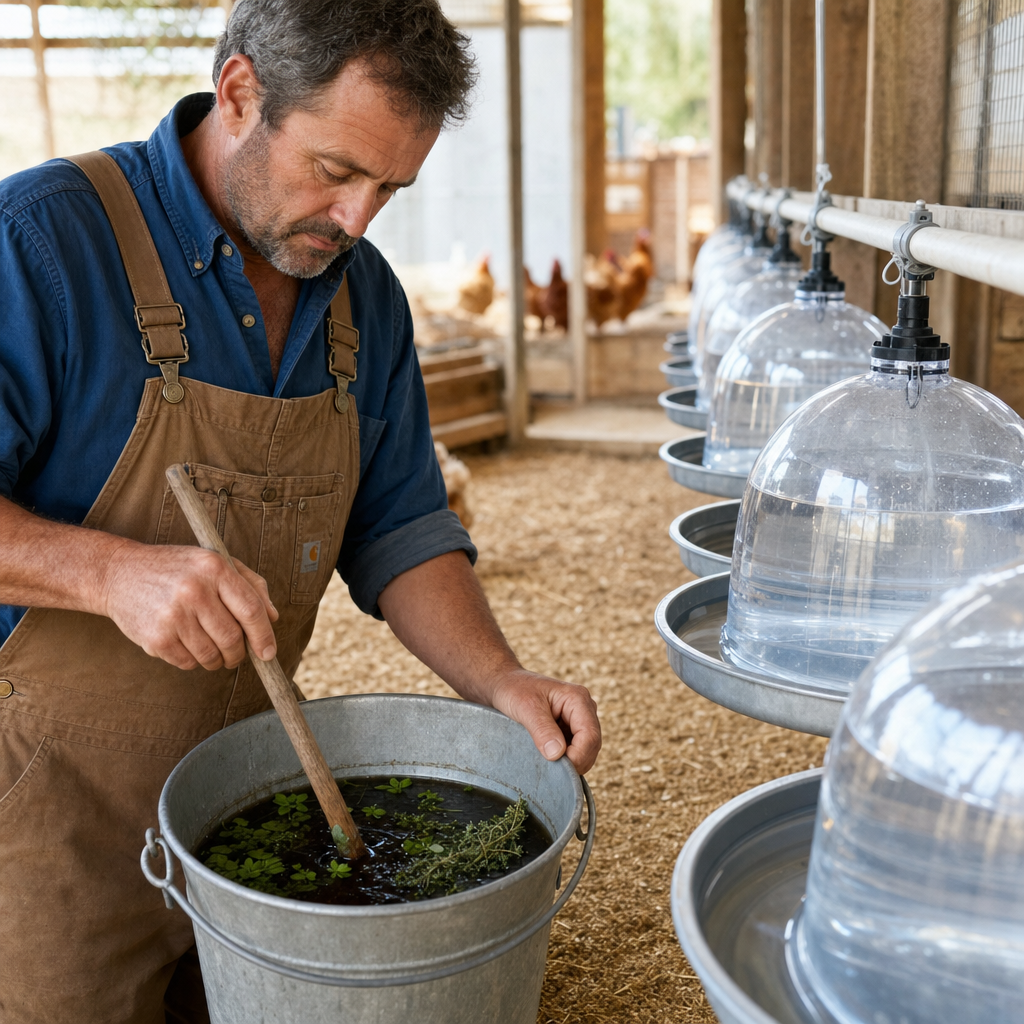
Have you ever looked at your flock and felt that clean water alone was keeping them alive, but not really helping them thrive? That is where many farmers get stuck.
They feed well. They clean the pen. They change water daily. Yet the birds still look dull after stress, recover slowly after illness, or fail to convert feed the way they should. Then someone online says, “Just add this one thing to the drinker,” and suddenly every bucket on the farm becomes a chemistry experiment.
Here is the truth: organic water remedies for poultry can be useful, but only when they are used with purpose, correct timing, and realistic expectations. They are not magic. They are supportive tools. Used well, they can encourage drinking, support gut health, help birds through heat stress, and improve recovery after a rough period. Used badly, they can reduce water intake, waste money, or delay proper treatment.
In this guide, you will learn what these remedies really are, why farmers use them, how they work, which five options are most practical, how to use them safely, and the mistakes that quietly spoil results on many farms.
What Are Organic Water Remedies for Poultry?
Organic water remedies for poultry are natural plant-based or household ingredients added to drinking water to support birds during routine management, mild stress, or recovery periods. Farmers often use them because water is the fastest way to reach the whole flock, especially when birds are eating less.
For beginners, think of them as supportive flock-care tools, not miracle cures. Garlic water, ginger water, apple cider vinegar water, mild herbal infusions, and moringa water are all common examples. They are popular because the ingredients are affordable, easy to find, and simple to prepare on small or large farms.
The reason these remedies attract so much attention is simple: birds drink before they eat. A flock under heat stress may refuse feed, but many birds will still seek water. That makes the drinker one of the most practical places to deliver short-term support.
Still, these remedies have limits. They do not replace:
- Vaccination
- Good feed formulation
- Clean housing
- Biosecurity
- Veterinary diagnosis
- Proper treatment when disease is present
A good way to think about it is this: natural poultry remedies can support the bird, but management keeps the bird alive and productive.
Why Does This Happen?
Farmers reach for water remedies because many common poultry problems start by affecting intake, hydration, digestion, or stress response. When birds are under pressure, water becomes the most immediate support channel on the farm.
Stress changes how birds behave
Heat, transport, vaccination, feed change, overcrowding, and disease challenge all put stress on the flock. A stressed bird often eats less, drinks differently, digests poorly, and becomes less efficient. That is why a simple supportive drink may seem to “wake birds up” during difficult periods. The remedy may not be curing a disease; it may simply be helping the bird hydrate, settle the gut, or maintain intake.
The gut is often the hidden battlefield
Many poultry issues show up first in the digestive system. Loose droppings, poor feed conversion, weak growth, and post-treatment weakness often trace back to gut irritation, poor water quality, feed contamination, or stress. That is why remedies like apple cider vinegar, garlic, ginger, and moringa get attention. Farmers are often trying to support poultry gut health, even if they do not call it that.
Water is practical on real farms
For a backyard farmer with 20 birds, a water remedy is quick and affordable. For a semi-commercial farmer with 800 broilers, it is one of the easiest ways to support the whole group at once. The same logic applies on bigger farms too, though commercial producers need tighter control over dosage, consistency, and water-system compatibility.
Common situations where farmers consider supportive water remedies include:
- Heat stress
- Recovery after medication or illness
- Poor appetite
- Mild digestive upset
- General flock weakness
- Early seasonal stress
But here is the important part: if birds are coughing hard, dying, passing bloody droppings, or showing nervous signs, do not hide behind herbs in a drinker. That is when diagnosis matters most.
How It Works
The logic behind these remedies is not mysterious. Most of them work, when they work at all, through one of four simple pathways: encouraging water intake, supplying mild bioactive compounds, supporting digestion, or helping birds recover after stress.
Garlic contains sulfur compounds such as allicin, which have shown antimicrobial activity in laboratory settings. That does not mean garlic water is a replacement for antibiotics, but it helps explain why garlic water for chickens remains popular in natural systems. Some farmers report better appetite and more vigorous birds when diluted garlic water is used occasionally.
Ginger is valued for compounds that may support digestion and reduce irritation. In human and animal nutrition research, ginger is often discussed for digestive comfort, antioxidant effects, and appetite support. On farms, it is most often used during weather stress or after a hard week, not because it is magic, but because birds under stress need gentle support.
Apple cider vinegar is widely used because acidity can change water pH and may help create a less favorable environment for some microbes in the water line or upper digestive tract. It is one of the most common natural poultry remedies, especially for older backyard systems. The benefits are usually management-related and modest, not dramatic.
Moringa is different. It is less about acidity or pungent plant compounds and more about nutrition. Moringa water for poultry is used as a recovery support because moringa leaves contain vitamins, minerals, antioxidants, and plant protein. It is especially attractive where moringa grows locally and cheaply.
A quick reality check helps here:
- These remedies are supportive, not curative
- Results depend on feed, housing, hygiene, and climate
- Strong-smelling or overly concentrated mixtures can reduce water intake
- Sick birds still need proper diagnosis and treatment
That last point deserves bold ink and a farmer’s drumbeat: if birds stop drinking, the remedy has failed, no matter how “organic” it sounds.
Step-by-Step Practical Guide
This is the part every farmer cares about: what to prepare, when to use it, and how to avoid turning a helpful idea into a flock problem.
1. Garlic Immunity Water
Garlic is one of the most widely used household remedies on poultry farms.
How to prepare it
- Crush 10 garlic cloves
- Add to 10 litres of clean water
- Soak for 2 hours
- Strain if needed before serving
When farmers use it
- Often offered Monday and Thursday
- Best used as a short morning support drink for the flock
Why it may help
Garlic may support appetite and general resilience, especially during mild stress periods. Many farmers use it as part of a routine flock-support plan.
Practical caution
Do not make it too strong. If birds dislike the smell and stop drinking, you have created a bigger problem than the one you were trying to solve.
2. Ginger Metabolism Water
Ginger is a favorite during hot weather and digestive stress.
How to prepare it
- Grate 1 thumb-sized piece of ginger
- Add to 5 litres of water
- Boil for 10 minutes
- Cool completely before serving
When farmers use it
- Often used Tuesday and Friday morning
- Useful during seasonal heat or sluggish flock periods
Why it may help
Farmers use ginger because it may support digestion and encourage birds to drink during mild heat stress. It is not a substitute for electrolytes, shade, or ventilation, but it can fit into a broader heat stress remedy for chickens plan.
Practical caution
Never serve it hot. Also, if the flavor is too strong, birds may drink less.
3. Apple Cider Vinegar Gut Water
This is probably the easiest and most scalable of the five remedies.
How to prepare it
- Mix 10 ml apple cider vinegar per 1 litre of drinking water
When farmers use it
- Often used Wednesday and Saturday
- Some small farmers rotate it regularly rather than using it daily
Why it may help
Apple cider vinegar for chickens is used to support water acidity and digestive balance. Some layer farmers also like it as part of a gut-health routine, especially when birds are recovering from stress or feed change.
Practical caution
- Never use apple cider vinegar in metal drinkers
- Use plastic drinkers or safe water systems
- Stop use if birds reduce intake
4. Chilli-Ginger Respiratory Water
This is the most dramatic remedy in the script, and it needs the most careful handling.
How to prepare it
- Boil 5 chilli peppers plus 1 thumb ginger in 10 litres of water for 10 minutes
- Cool and strain thoroughly
When farmers use it
- At the first sign of mild coughing, sometimes for up to 3 consecutive days
Why farmers try it
The idea is that ginger may provide soothing plant compounds, while chilli is believed by some farmers to help clear mucus. That is the folk logic.
Important caution
Here is the educator part, boots muddy and honest: respiratory signs in poultry are too serious for guesswork. Coughing can mean ammonia irritation, infectious bronchitis, Newcastle disease, chronic respiratory disease, or other problems. Strong chilli solutions may also reduce water intake. If you use this at all, keep it mild, watch birds closely, and do not delay proper diagnosis.
A safer farm rule is:
- Use it only as temporary supportive care
- Improve ventilation immediately
- Check ammonia levels
- Isolate obvious sick birds where practical
- Seek veterinary advice if symptoms spread or worsen
5. Moringa Strength Water
This is one of the most farmer-friendly recovery remedies, especially where moringa is available.
How to prepare it
- Blend 2 handfuls of fresh moringa leaves
- Add to 5 litres of water
- Strain before serving
When farmers use it
- Often given Monday, Wednesday, and Friday
- Useful during recovery, after stress, or when birds look dull
Why it may help
Moringa contributes micronutrients and plant compounds that can support recovery and general flock strength. Moringa water for poultry is especially attractive for small farmers because it is cheap, local, and easy to produce.
Practical caution
Use fresh leaves. Wash them well. Do not leave moringa water standing all day in hot weather, where it can spoil.
How to introduce any remedy safely
Before you put anything new in the drinker, follow this simple process:
- Start with clean, cool water
- Test the remedy on one group first
- Offer it during the cooler part of the day
- Watch actual drinking behavior
- Remove leftovers and clean drinkers
- Return to plain water after the support window
For larger farms, consistency matters even more. If one attendant makes the remedy weak and another makes it strong, results will be unpredictable. Standardize the method. Write it down. Train the staff. Chickens do not enjoy surprise recipes.
Common Mistakes Farmers Make
The biggest mistake is believing that natural equals harmless. It does not. Birds are sensitive to changes in smell, taste, and water quality.
Mistake 1: Using remedies instead of fixing management
If the pen is hot, wet, overcrowded, and poorly ventilated, no herb in water will save flock performance.
Mistake 2: Making mixtures too strong
A farmer may think, “If 10 cloves help, 25 will help more.” That logic has buried many good ideas. Strong water often means lower intake.
Mistake 3: Leaving plant water in the drinker too long
Garlic, ginger, and moringa mixtures can ferment, spoil, or become unpalatable when left too long in heat.
Mistake 4: Treating coughing as a simple home-remedy issue
Respiratory signs are one of the fastest ways to lose birds if the real cause is infectious.
Mistake 5: Ignoring water hygiene
Dirty drinkers can cancel the benefit of any supportive remedy.
Mistake 6: Overlapping too many remedies
Some farmers mix garlic, vinegar, ginger, and moringa all in the same week without a plan. The result is confusion, inconsistent intake, and poor tracking.
Watch out for these warning signs after offering any remedy:
- Birds avoid the drinker
- Water intake drops sharply
- Droppings worsen
- Birds appear more stressed
- Symptoms spread despite “supportive care”
If you see these, stop, reset to plain water, and reassess the flock.
Pro Tips for Better Results
The best farmers do not just know recipes. They know when not to use them.
First, match the remedy to the problem. Garlic and apple cider vinegar are often used for routine support. Ginger fits stress periods better. Moringa shines during recovery. Respiratory signs need caution and fast observation.
Second, use water remedies as part of a system. That means:
- Clean water
- Cool drinkers
- Dry litter
- Good feed
- Ventilation
- Record keeping
Third, think in flock patterns, not single-bird drama. If one bird looks off, check the whole house. Is it heat? Feed change? Water contamination? Ammonia? A remedy works best when it responds to a real pattern.
Fourth, backyard and commercial farmers should scale differently. A village flock can tolerate a more hands-on approach. A bigger flock needs standard mixing rates, staff training, and observation records.
Finally, keep one golden rule: plain water is never optional. If a remedy disrupts drinking, plain clean water wins every time.
Key Takeaways
- Organic water remedies for poultry are supportive tools, not miracle cures.
- Water-based remedies work best when birds are stressed, recovering, or eating less.
- Garlic, ginger, apple cider vinegar, chilli-ginger, and moringa each serve different practical roles.
- If a remedy reduces water intake, stop immediately and return to plain clean water.
- Apple cider vinegar should not be used in metal drinkers.
- Respiratory signs need caution because coughing can signal serious infectious disease.
- Good management always matters more than any single natural remedy.
- Backyard and commercial farmers get better results when they standardize timing, dosage, and observation.
FAQ
1. What are the best organic water remedies for poultry?
The most common options are garlic water, ginger water, apple cider vinegar water, mild herbal respiratory support, and moringa water. Each serves a different purpose, such as gut support, recovery, or stress management. None should replace clean water, proper feed, or veterinary treatment.
2. Is apple cider vinegar for chickens safe every day?
Apple cider vinegar for chickens is usually used in rotation, not endlessly without review. Many farmers offer it a few times per week. Use the correct dilution, avoid metal drinkers, and watch flock water intake. If birds drink less, stop and return to plain water.
3. Does garlic water for chickens treat disease?
Garlic water for chickens may support general resilience and appetite, but it is not a proven cure for infectious poultry diseases. It works best as a supportive natural poultry remedy during mild stress. Sick birds with severe symptoms still need diagnosis and proper treatment.
4. Can moringa water for poultry improve recovery?
Yes, moringa water for poultry may support recovery because moringa leaves provide vitamins, minerals, antioxidants, and plant protein. Farmers often use it after stress, poor growth, or a difficult disease period. It is best used fresh and as part of a broader recovery plan.
5. What is a good heat stress remedy for chickens?
A good heat stress remedy for chickens starts with cool clean water, shade, better airflow, reduced crowding, and electrolytes where appropriate. Ginger water may be used as mild supportive care, but management changes do the heavy lifting during true heat stress.
6. Should I use chilli water for chickens with coughing?
Use extreme caution. Coughing in poultry can come from ammonia, viral disease, bacterial infection, or poor ventilation. A mild chilli-ginger remedy may be used by some farmers as temporary supportive care, but it should never delay diagnosis, isolation, or veterinary attention.
Conclusion
If you want stronger birds, better recovery, and a flock that handles stress more consistently, start by treating water as more than a bucket-filling routine. Used wisely, organic water remedies for poultry can support immunity, gut health, hydration, and recovery at key moments on the farm. But the real secret is not the ingredient alone. It is the system around it.
Choose the remedy that matches your flock’s immediate need. Keep the mix simple. Watch water intake closely. And never let a natural remedy replace the basics that truly protect performance: clean water, sound management, biosecurity, and timely treatment when disease is present. Try one remedy this week, apply it properly, and share this guide with another farmer who needs a smarter water-support plan.