Most farmers stick with commercial feed every batch not because poultry feed formulation is hard. It is because nobody has explained what each ingredient actually does in the bird’s body. That one gap in knowledge is costing farmers money, batch after batch. It is a skill that is genuinely simple once it clicks.
Farmers can master feed formulation, not just large commercial operations. It comes down to understanding three categories of ingredients. These are energy sources, protein sources, and the fillers that round out the ration. Once you know what each one contributes, you can build rations that fit your birds and budget. This helps you avoid paying full price for a bag that may not fit your flock’s needs. It aligns feeding with your flock at each growth stage.
Why So Many Farmers Stay Dependent on Commercial Feed
Cost or access does not capture the real issue. Ingredient labels and feed terminology were never explained in plain language. This left the average backyard or small-scale farmer without a clear understanding. Words like crude protein, metabolize energy, and amino acid profile sound technical. The ideas behind them are straightforward once someone walks you through them.
This gap matters because feed prices follow global grain markets. Farmers who understand formulation can adjust their mix when prices spike, instead of absorbing the full cost every time. Knowing your ingredients is not about replacing commercial feed entirely. It is about having the option to formulate when it makes financial sense.
READ ALSO: Feeding and Water Management in Poultry Farming
The Energy Ingredients That Fuel Your Flock
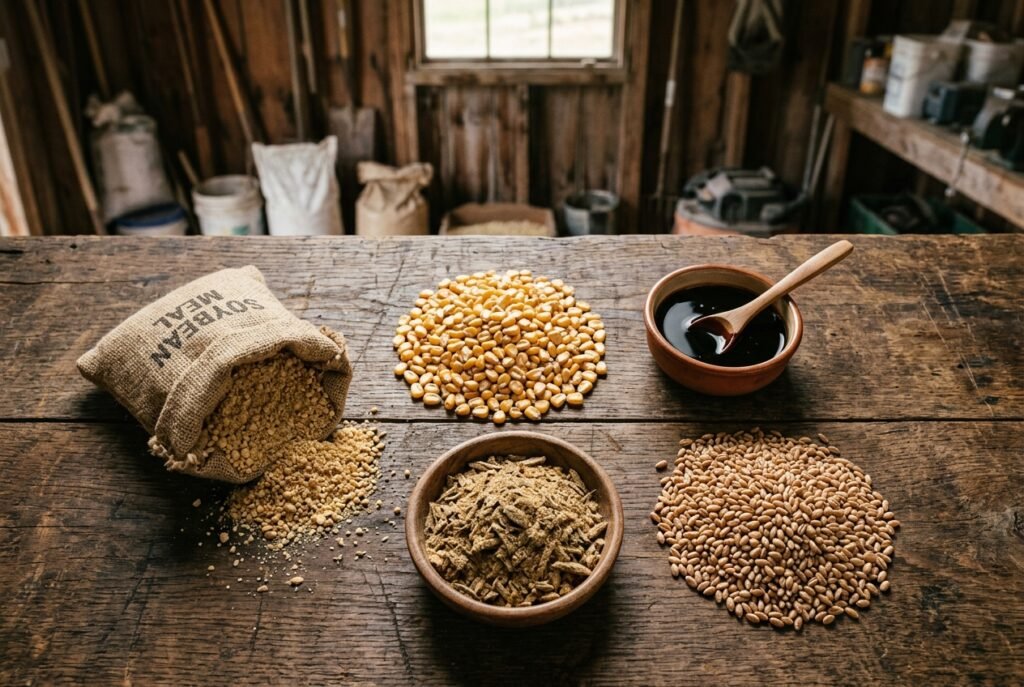
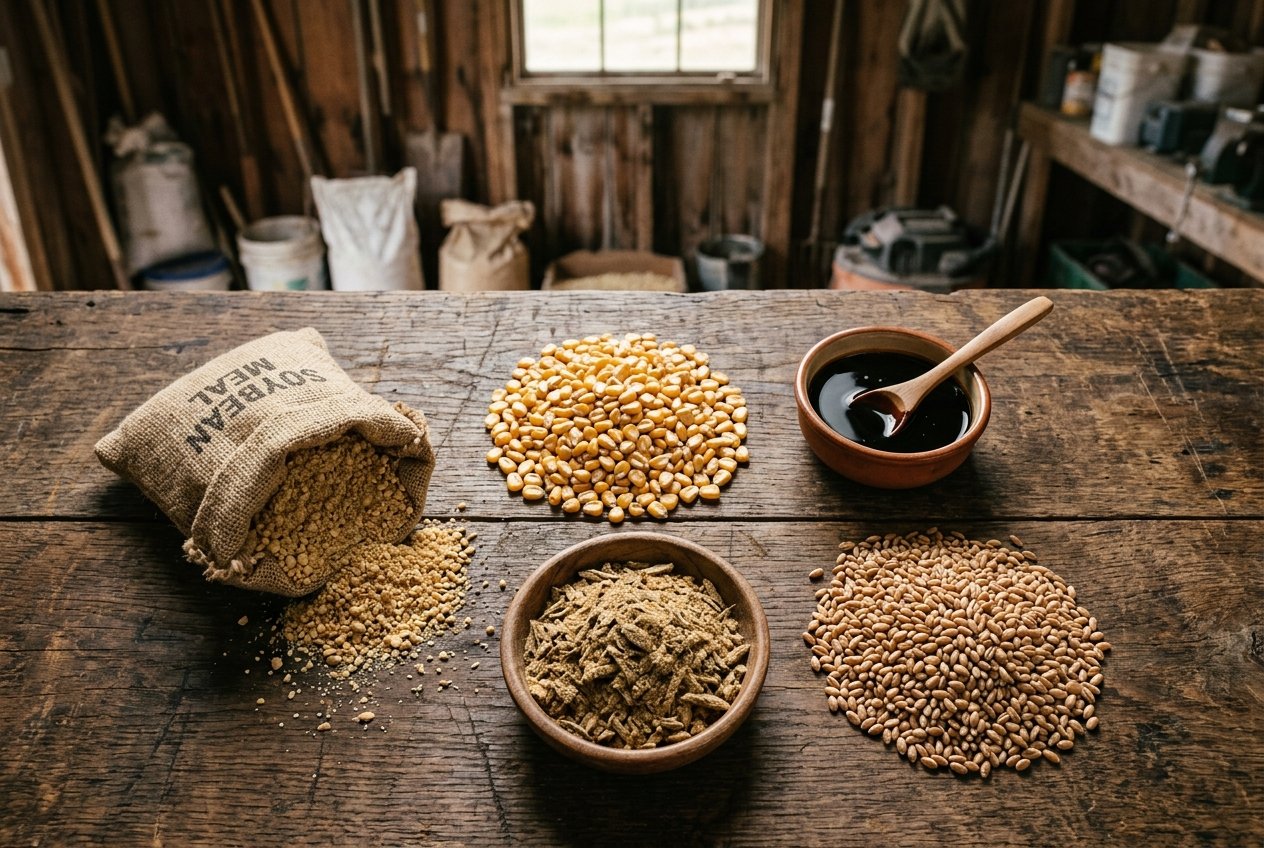
Every ration needs an energy base, and three ingredients carry most of that load in small scale poultry farming.
Maize is the primary fuel in almost every formula used across Africa and beyond. Maize powers growth, generates body heat, and keeps birds active throughout the day. This is why maize typically makes up 50 to 60 percent of a broiler ration. Wheat steps in as a strong alternative when maize prices climb. It offers comparable energy value. Wheat helps avoid overpaying during price spikes. Molasses plays a smaller but valuable role. It improves the taste of the feed and boosts appetite, and birds that eat more consistently convert that feed into weight gain more efficiently.
Energy ingredients get your birds moving and growing, but they cannot build muscle or feathers on their own. That is where protein takes over.
Protein Ingredients: Where Most Homemade Formulas Fail
This is the section that trips up more backyard formulators than any other, and getting it wrong is usually what pushes farmers back to commercial feed for good.
Soybean meal is considered the king of protein ingredients for good reason. It delivers 44 to 48 percent protein and drives muscle and feather development better than almost any other common source. Fish meal sits even higher, at 55 to 60 percent protein, making it the most powerful option available for chicks and young broilers that need rapid early growth.
When soybean meal gets expensive, sunflower meal offers a reasonable alternative at 28 to 32 percent protein, while canola meal comes in stronger at 35 to 38 percent and works well as a direct soybean replacement in many formulas. Cottonseed cake provides a budget option at 22 to 24 percent protein, but it needs to be used carefully since it contains gossypol, a compound that can affect fertility and liver function in poultry if overused. Corn gluten meal rounds out the list at 27 to 30 percent protein, with the added benefit of deepening egg yolk color, which matters if you are also running layers.
Getting the protein percentage right for each growth stage, starter, grower, and finisher, is the single factor that determines whether a homemade formula performs or falls flat. A starter ration typically needs 20 to 22 percent crude protein, dropping to around 18 to 20 percent at grower stage and settling near 16 to 18 percent by finisher. Missing that target in either direction either stunts growth or wastes expensive protein your birds do not need yet.
Putting Energy and Protein Together the Right Way
Once you understand what each ingredient contributes, whether it is energy, protein, or fiber, feed formulation stops feeling complicated. It becomes a matter of applying the right ratio for the right growth stage.
A simple broiler starter mix leans heavily on maize for energy, brings in soybean meal and a touch of fish meal for protein, and adds a vitamin mineral premix to cover what the base ingredients cannot provide on their own. As birds move into the grower and finisher stages, the protein percentage drops slightly while energy ingredients increase, since older birds prioritize weight gain over rapid tissue development.
This is also where many farmers discover that mixing their own feed does not mean cutting corners. Research from agricultural extension programs consistently shows that correctly balanced homemade rations can match commercial feed performance, provided the protein and energy ratios are calculated accurately for each growth phase rather than estimated by eye.
Frequently Asked Questions
What is the easiest way to start learning poultry feed formulation?
Start by learning what each ingredient contributes, energy, protein, or fiber, before worrying about exact ratios. Once you understand the role of maize, soybean meal, and fish meal individually, building a basic starter formula becomes much easier.
Can I replace soybean meal entirely in my feed formula?
Yes, sunflower meal or canola meal can substitute for soybean meal, though you may need to adjust quantities slightly since their protein percentages differ. Canola meal at 35 to 38 percent protein is generally the closer match.
Is fish meal necessary for broiler feed?
It is not strictly necessary, but fish meal’s high protein content, 55 to 60 percent, makes it extremely valuable for chicks and young broilers that need fast early growth. Many small scale farmers include a modest amount during the starter phase specifically for this reason.
Why is cottonseed cake considered a budget option that needs caution?
Cottonseed cake contains gossypol, a natural compound that can harm liver function and fertility if birds consume too much of it. It works as an affordable protein source only when included at controlled, moderate levels in the ration.
How much protein does a broiler starter feed actually need?
Broiler starter feed typically requires 20 to 22 percent crude protein to support rapid early muscle and feather development. This drops gradually as birds move into grower and finisher stages.
Does molasses actually make a difference in feed intake?
Yes, molasses improves palatability and encourages birds to eat more consistently. Higher, steadier feed intake generally translates into better weight gain over time, especially in rations that might otherwise taste bland.
Is homemade feed cheaper than commercial feed long term?
It can be, particularly when you source ingredients locally and adjust your formula as prices shift. The savings depend on consistent access to quality ingredients and accurate ratios, which is why understanding each ingredient’s role matters so much.
Final Thoughts
Feed formulation is not complicated and it is not expensive once you understand what each ingredient actually does. Maize, wheat, and molasses carry the energy load, while soybean meal, fish meal, and their alternatives build muscle and feathers at the right percentage for each growth stage. Knowledge applied correctly on your own farm is what closes the gap between relying on commercial feed and formulating with confidence.