Most layer farmers buying feed from the shop have no idea what is actually inside that bag. This layer mash formula changes that. Below is the exact recipe for 50kg of feed. It lists every ingredient and each percentage, and explains why it belongs in the mix.
A farmer who understands why each ingredient is there rarely gets the ratios wrong. Even when adjusting for locally available ingredients, accuracy remains high. This is not a rough estimate pulled together by guesswork. It is a balanced, scientifically structured formula built on the same principles commercial feed mills use, just without the markup and without the mystery fillers.
The Energy Base That Powers Egg Production
Every layer formula starts with energy, because a hen without enough fuel cannot sustain daily egg production no matter how good the rest of her diet looks on paper.
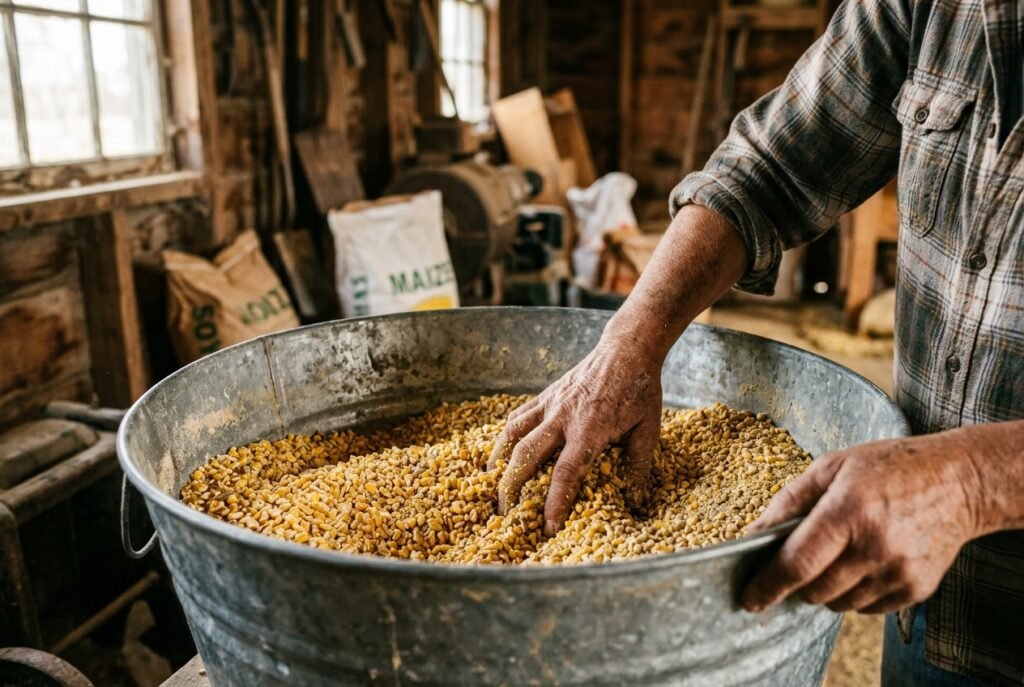
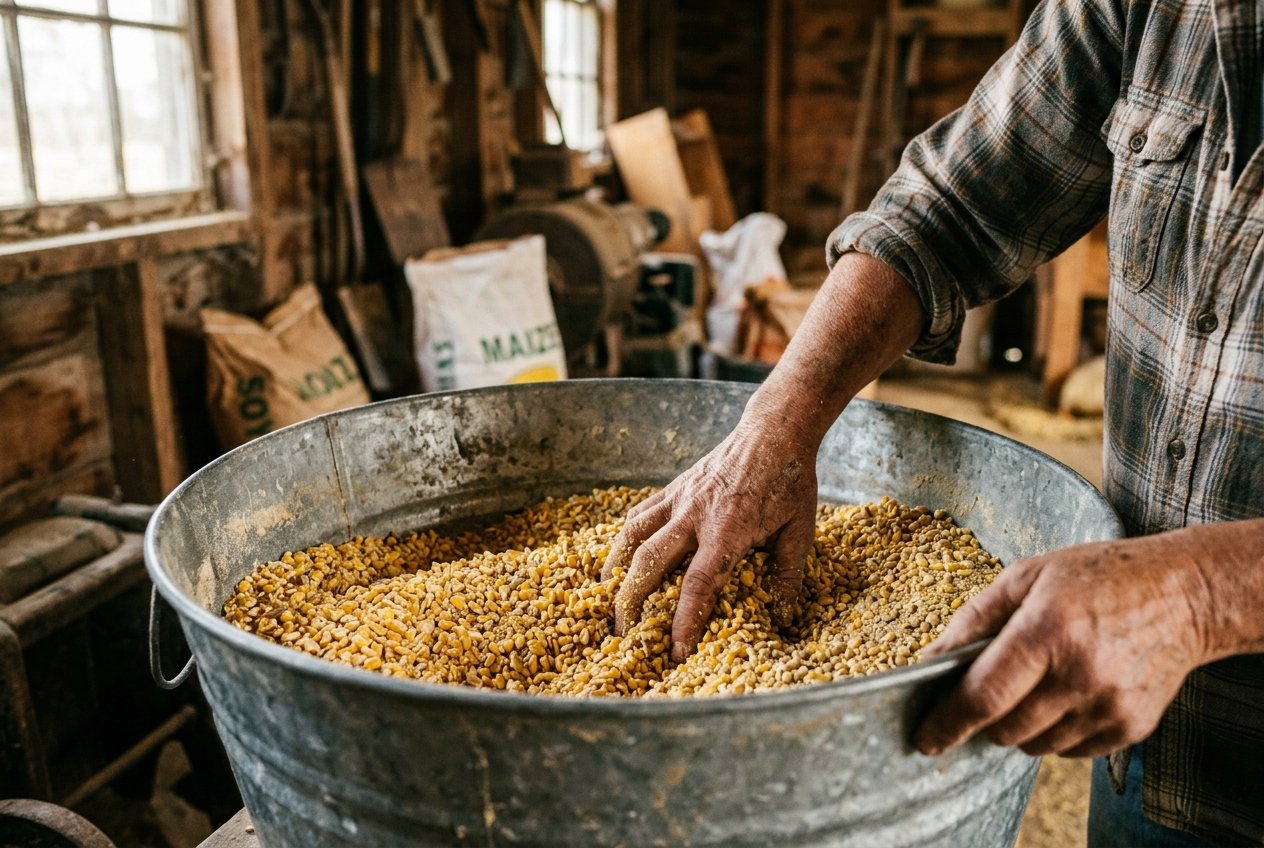
Maize makes up 50 percent of this formula, or 25kg out of the full 50kg batch. That is half the entire recipe, and it earns that share because maize powers daily activity, supports egg production, and generates the body heat a laying hen needs to stay consistent day after day. Without enough maize in the mix, layers simply do not have the energy reserve to keep producing at rate.
Wheat bran rounds out the energy section at 5 percent, or 2.5kg. Its job is less about raw energy and more about fiber, keeping the digestive system moving smoothly. Layers need consistent gut movement to maintain consistent egg production, and skipping this ingredient is a mistake a lot of first time formulators make because it seems minor compared to maize.
Protein Ingredients That Build the Egg Itself
Once the energy base is set, protein takes over as the group that actually determines egg quality and laying rate.
Soybean meal sits at 25 percent, or 12.5kg, making it the single largest protein source in the formula. It is considered the king of plant protein in poultry nutrition because it supplies the amino acids needed to build egg white, yolk, and shell structure, and it is genuinely non negotiable in any serious layer formula.
Fish meal contributes 5 percent, or 2.5kg, and this is where animal protein earns its place. Layers fed fish meal tend to produce more consistently and recover faster from stress events like heat waves or disease challenges, largely because animal protein delivers a more complete amino acid profile than plant sources alone. Sunflower meal fills in at another 5 percent, or 2.5kg, closing the amino acid gap between soybean and fish meal without pushing the budget past what a small scale farmer can sustain long term.
Minerals: The Group Most Homemade Formulas Get Wrong
This is the section that quietly determines whether your layers stay productive for a full laying cycle or start producing thin, weak shells within months.
READ ALSO: How to Mix Chicken Feed: A Simple Guide to Ingredients
Limestone leads the mineral group at 4 percent, or 2kg, and it is the primary calcium source for eggshell formation. Skip or shortchange this ingredient and your layers will start pulling calcium directly from their own bones to keep producing shells, which leaves them permanently weakened over time. Oyster shell adds another 3 percent, or 1.5kg, and its role is slightly different from limestone. It releases calcium more slowly, which helps maintain shell quality consistently through the entire laying cycle rather than just the first few productive months.
Bone meal finishes the mineral section at 2 percent, or 1kg, delivering phosphorus that works alongside calcium for both shell strength and skeletal health. Calcium without enough phosphorus is genuinely only half the job, since the two minerals depend on each other for proper absorption and bone development. Research on poultry mineral nutrition consistently shows that calcium to phosphorus ratios matter as much as the raw quantities of each, which is exactly why this formula includes both rather than leaning on limestone alone.
Small Quantities With Out-sized Impact
The final three ingredients make up less than 2 percent of the total formula combined, but skipping any of them causes problems disproportionate to their size.
Salt at 0.5 percent, or 250g, maintains electrolyte balance and stimulates feed intake, but exceeding this quantity causes excess water consumption and wet droppings, so this is one measurement worth weighing carefully rather than estimating by eye. Premix contributes another 0.5 percent, or 250g, supplying the vitamins and trace minerals that the rest of the formula simply cannot provide in correct quantities on its own. Vegetable oil closes out the recipe at 1 percent, or 500g, boosting energy density and improving how palatable the whole mix tastes, which keeps layers eating consistently and converting feed more efficiently.
The Complete Formula at a Glance
| Ingredient | Percentage | Quantity |
|---|---|---|
| Maize | 50% | 25kg |
| Wheat Bran | 5% | 2.5kg |
| Soybean Meal | 25% | 12.5kg |
| Fish Meal | 5% | 2.5kg |
| Sunflower Meal | 5% | 2.5kg |
| Limestone | 4% | 2kg |
| Oyster Shell | 3% | 1.5kg |
| Bone Meal | 2% | 1kg |
| Salt | 0.5% | 250g |
| Premix | 0.5% | 250g |
| Vegetable Oil | 1% | 500g |
This totals slightly over 100 percent, so adjust the oil and salt quantities slightly to land exactly on 50kg once you weigh everything out. This layer mash formula typically costs noticeably less than commercial feed of comparable quality, and the advantage goes beyond price. You know exactly what is inside every gram, with no fillers and no ingredients you cannot identify.
Frequently Asked Questions
Can I scale this layer mash formula up or down?
Yes, the percentages stay fixed regardless of batch size. Simply apply the same percentage to whatever total weight you are mixing, whether that is 25kg or 200kg.
What happens if I use less limestone than the formula calls for?
Reducing limestone forces your layers to pull calcium from their own skeletal reserves to keep producing shells, which leads to thin, weak eggshells and permanent bone weakness over time. Limestone is one ingredient not worth cutting to save cost.
Can I replace fish meal if it is too expensive in my area?
You can increase soybean meal slightly or substitute with another animal protein source, though you may notice a small drop in shell strength and stress recovery, since fish meal’s amino acid profile is difficult to fully replace with plant protein alone.
Why does the formula total slightly over 100 percent?
Rounding across eleven ingredients naturally pushes the total slightly past 100 percent. Adjusting the oil and salt amounts slightly brings the batch to an exact 50kg without meaningfully changing the nutritional balance.
Is homemade layer mash as effective as commercial feed?
When mixed accurately to the correct ratios, homemade layer mash can match commercial feed performance, since you are following the same core nutritional principles, just without the added cost of commercial processing and branding.
How often should I mix a new batch of this formula?
Most small scale farmers mix every one to two weeks depending on flock size, since fresh ingredients maintain better nutrient quality than feed stored for extended periods, particularly with vegetable oil, which can turn rancid over time.
Do I need a premix if I am already using natural ingredients?
Yes, premix supplies specific vitamins and trace minerals in precise quantities that natural ingredients cannot reliably deliver on their own. Skipping it is one of the most common reasons homemade formulas under-perform despite getting the major ingredients right.
Final Thoughts
This layer mash formula gives you a complete, balanced recipe built on maize and wheat bran for energy, soybean meal and fish meal for protein, and limestone, oyster shell, and bone meal for strong, consistent eggshells. Mix it accurately and your layers get exactly what they need, batch after batch, without the cost or guesswork of commercial feed.