
If you want to raise organic chickens, one housing system is disqualified before you even bring home your first bird, and it happens to be the one most beginners assume is easiest. Understanding what actually makes a flock organic will save you money, save you mistakes, and get your birds healthier from day one.
Here’s something most new keepers do not realize. If you are raising chickens for your own household, you do not need any certification to call your flock organic. Certification only kicks in once you are selling more than $5,000 a year in organic products. For a backyard setup, raising organic chickens is really about following the actual practices, not chasing a label.
That distinction matters, because it means the real question is not “how do I get certified,” it is “what does organic actually require.”
The Housing Question That Trips Up Most Beginners
Every new keeper eventually has to choose between three housing systems: deep litter, free range, or cage confinement. Only two of these are even compatible with organic standards, and that fact alone eliminates a popular option right out of the gate.
Cage confinement is out completely. USDA organic standards specifically prohibit keeping birds in cages. Organic chickens have to be able to move freely, perch, and get outside. This is not a trade-off to weigh against convenience. It is disqualifying, full stop.
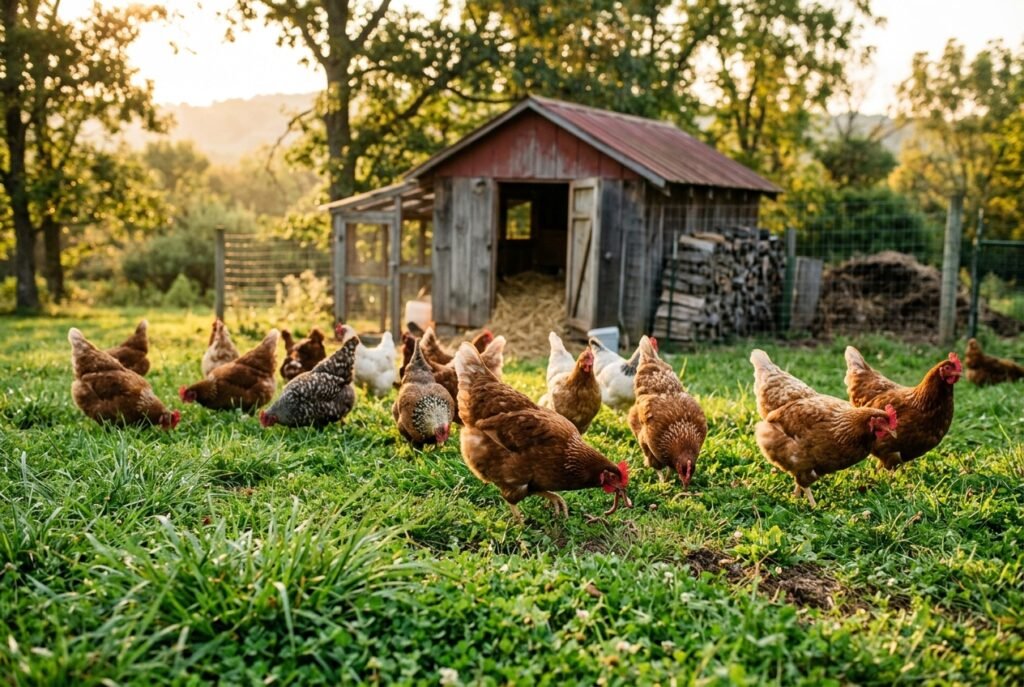
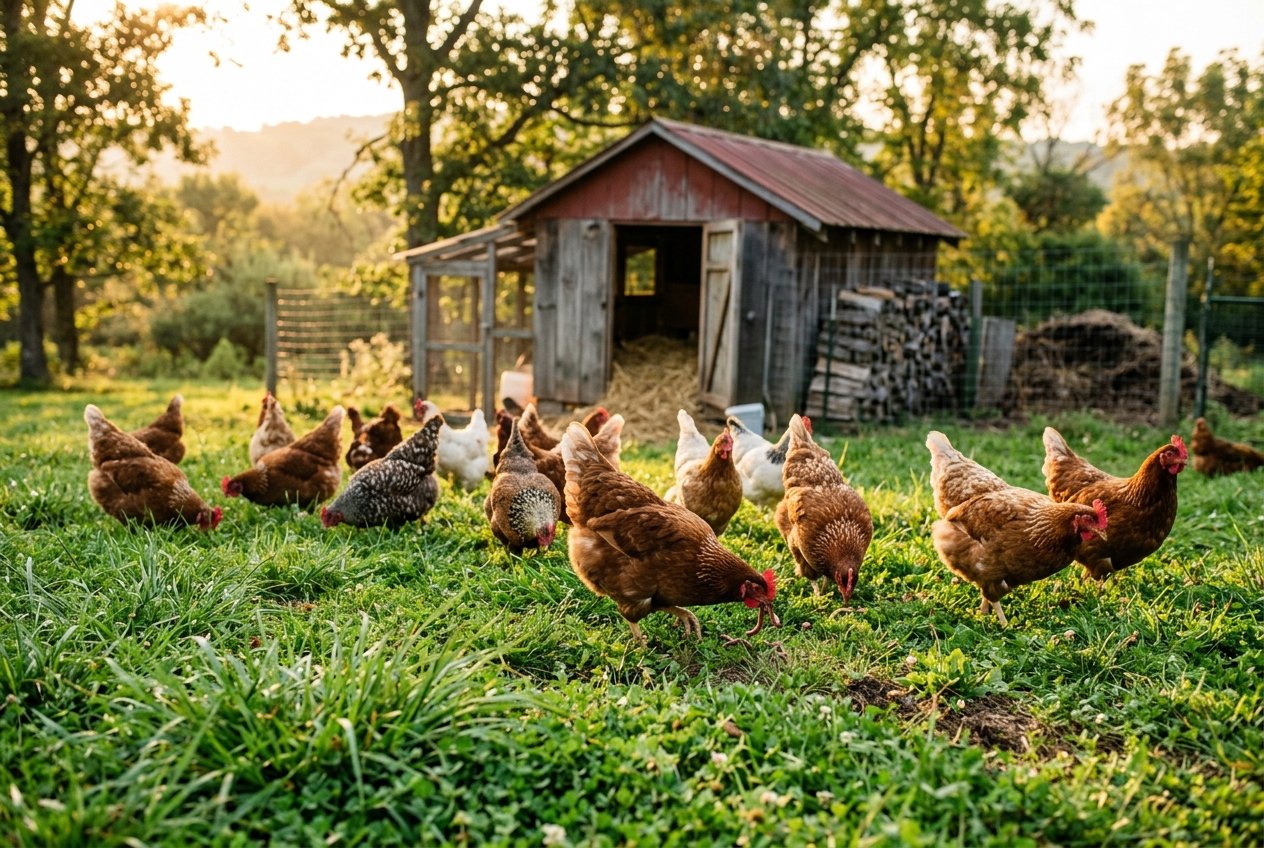
That leaves deep litter and free range, and the good news is they are not competitors. They are meant to work together. Deep litter is your indoor system, a thick base of straw or bedding that builds up over time and composts slightly as it goes. It helps manage moisture and odor naturally while giving your birds a warm, dry place to shelter, nest, and roost overnight.
But here is the part that surprises a lot of people: deep litter alone does not make a flock organic. Organic standards specifically require genuine outdoor access, and the honest truth most labels skip is that the rule technically only requires access, not real pasture. A small concrete pad technically satisfies the letter of the requirement. To keep your flock truly organic in spirit, provide birds with real vegetated ground they can scratch and forage.
So the real answer to the housing question is both systems, working in tandem. Deep litter indoors for shelter and warmth, genuine free range outdoors for real foraging. Organic housing standards actually build around that combination, so skipping either half leaves you only halfway there.
The Feed Requirement Most Backyard Keepers Underestimate
Housing is only half the picture. To genuinely raise organic chickens, feed has to be 100% organic, meaning no synthetic pesticides, no GMOs, no animal by-products, and absolutely no antibiotics or growth hormones mixed into the ration.
This is the part most backyard keepers underestimate, and it is easy to see why. A bag of feed that says “natural” on the label is not the same as organic, and plenty of conventional feeds slip in synthetic additives that quietly disqualify an otherwise well-managed flock. Reading the ingredient list matters just as much as reading the front of the bag.
Organic feed costs more, often 20 to 40 percent higher than conventional feed depending on your region and supplier, which is one reason so few backyard flocks fully commit to it. But for keepers serious about raising truly organic birds, that cost is the trade-off for eliminating synthetic inputs from the food chain entirely.
Organic Does Not Mean Untreated
There is one more piece of the puzzle that gets misunderstood constantly, and it might be the most important one. Organic does not mean untreated.
Under official organic standards, medical treatment can never be withheld from a sick animal just to protect the organic label. A sick bird gets treated, full stop. That specific rule technically applies to certified commercial operations, but it is exactly the mindset worth carrying into your own backyard too.
This is where herbal remedies fit in properly. Garlic, oregano, moringa, and similar natural supports are genuinely valuable for prevention and gut health, and plenty of small-scale farmers use them as a daily foundation for flock wellness. But if a bird is seriously sick, that is the moment for real treatment. Herbs work alongside medical care, not instead of it. Treating illness properly is not a failure of your organic setup. Refusing to treat it is.
Putting It All Together on a Small Scale
Raising organic chickens on a backyard scale comes down to four things working together: deep litter for shelter, genuine free range access for foraging, fully organic feed, and proper veterinary care when a bird actually needs it. None of it requires certification if you are keeping birds for your own table and your own family.
What it does require is consistency. A single concrete pad technically checks the box for outdoor access, but a flock that gets real pasture, clean bedding, organic feed, and prompt care when something goes wrong is organic in every sense that actually matters to the bird’s welfare and the quality of what you get back from it, whether that is eggs or meat.
Frequently Asked Questions
Do I need certification to raise organic chickens at home?
No. Certification is only required if you are selling more than $5,000 a year in organic products. For your own household flock, following organic practices for housing, feed, and care is what matters, not paperwork.
Can chickens be organic if they live in a coop with no outdoor access?
No. Organic standards require genuine outdoor access. A coop-only setup, even with deep litter bedding, does not meet the outdoor access requirement on its own.
Is a concrete pad enough for outdoor access?
Technically it satisfies the letter of the rule, but it does not reflect the spirit of organic farming. Real vegetated ground for foraging is a better standard to hold yourself to.
What makes chicken feed organic?
Organic feed has no synthetic pesticides, no GMOs, no animal by-products, and no antibiotics or growth hormones. Always check the ingredient list, not just the front label.
Can I use herbal remedies instead of medicine for a sick chicken?
Herbs like garlic, oregano, and moringa are excellent for prevention and gut health, but a seriously sick bird needs real treatment. Herbs support health, they do not replace necessary medical care.
Is deep litter housing organic on its own?
No. Deep litter is a strong indoor shelter system, but it must be paired with genuine outdoor access to meet organic housing standards.
Are cages ever allowed in organic poultry farming?
No. Cage confinement is specifically prohibited under organic standards. Organic birds must be able to move freely, perch, and access the outdoors.
Final Thoughts
Raising organic chickens at home is simpler than the certification process makes it sound. Give your birds deep litter shelter combined with real outdoor foraging space, feed them fully organic feed, and treat illness properly when it shows up instead of relying on herbs alone. Do those four things consistently and you have a genuinely organic flock, no paperwork required.
Are you currently running deep litter, free range, or a mix of both? Tell me your setup in the comments.