
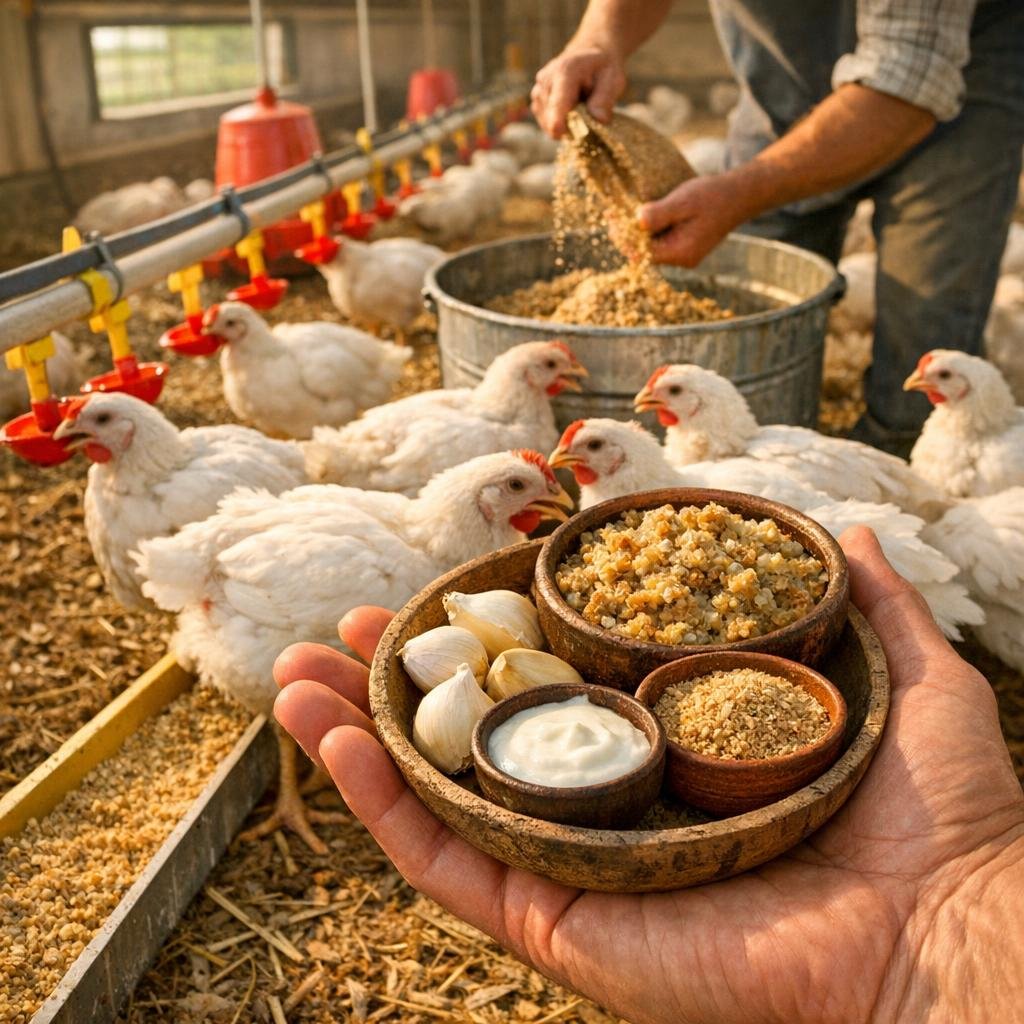
If you have been giving herbs to your chickens every week and still not seeing the performance you expect, you are not alone.
However, many poultry farmers use natural remedies like garlic, moringa, and fermented feed for growth, immunity, digestion, and disease resistance. But despite all that effort, the birds may still look weak, grow unevenly, eat poorly, or fail to convert feed the way they should. So what is going wrong?
However, in many cases, the problem is not the herbs.
However, farmers rely on herbs without first supporting the gut system that makes them effective. In addition, prebiotics are the missing piece.
Prebiotics are not medicine; rather, they nourish gut bacteria. They are not antibiotics. Prebiotics are more than just a supplement. Indeed, they are simply the natural compounds that feed the good bacteria already living inside your bird’s gut. And when those beneficial bacteria are strong, herbs work better, digestion improves, and bird performance becomes more consistent.
Think of it this way: if the beneficial bacteria in your chicken’s gut are soldiers protecting health and driving growth, then prebiotics are the food that keeps those soldiers active every day. A hungry soldier cannot fight well. In the same way, weak gut bacteria cannot protect your birds properly.
That is why prebiotics may be the one thing missing from your poultry farming system.
What Are Prebiotics in Poultry Farming?
Moreover, prebiotics are natural feed components that nourish beneficial gut bacteria.
They do not kill disease directly like medicine. Instead, they help the good microbes inside the digestive tract grow and stay active. Those good microbes then help the bird digest feed better, absorb nutrients more efficiently, and resist harmful organisms more effectively.
This is one reason gut health in poultry is such an important topic for both backyard and commercial farmers.
A healthy gut supports:
- Better digestion
- Improved nutrient absorption
- Stronger immunity
- More stable droppings
- Better growth and feed conversion
- Greater flock consistency
In simple terms, prebiotics help create the internal conditions that allow chickens to perform well.
Common Natural Prebiotic Sources for Chickens
Some of the most useful natural prebiotic sources are already familiar to poultry farmers, including:
- Garlic
- Fermented feed
- Wheat bran
- Moringa
- Other fiber-rich plant ingredients
Many farmers use these ingredients without realizing that part of their value comes from how they support beneficial bacteria in the gut.
Why Herbs Alone May Not Give You the Results You Expect
This is where many farmers miss an important point.
Most people think herbs work only because they fight disease directly. But in poultry, many herbs also work by helping to create a healthier gut environment. If that gut environment is weak, unstable, or overloaded with harmful bacteria, then even good herbs may produce only limited results.
That is why some farmers keep adding more herbs but still do not see clear improvement.
Why This Happens
Poor gut performance in chickens can be caused by:
- Dirty drinking water
- Spoiled or low-quality feed
- Sudden feed changes
- Stress from heat or overcrowding
- Wet litter
- High disease pressure
- Poor hygiene
- Lack of fiber and gut-supporting ingredients
When gut health is weak, birds may show:
- Slow growth
- Poor appetite
- Loose droppings
- Low feed efficiency
- Poor egg production
- Uneven flock size
- More frequent health problems
So when herbs seem to be failing, the problem may not be the remedy. The problem may be the gut environment inside the bird.
How Prebiotics Work in Chickens
Prebiotics work by feeding beneficial bacteria in the digestive tract.
Once those good bacteria are supported, they help the bird in several powerful ways.
They Feed the Good Bacteria
The beneficial microbes in the gut need nourishment to survive and multiply. Prebiotics provide that nourishment.
When these microbes are active and well-fed, they help maintain a balanced digestive system and reduce the chance for harmful bacteria to dominate.
They Support Better Digestion
A healthy gut ecosystem helps the bird break down feed more effectively. That means the chicken gets more value from the feed you already spend money on.
They Improve Nutrient Absorption
When the gut lining and microbial balance are healthy, chickens absorb nutrients more efficiently.
This supports:
- Weight gain
- Body condition
- Egg production
- Recovery after stress
- Better overall performance
They Help Herbs Perform Better
This is the biggest lesson for natural poultry farmers.
Herbs often work best when they are used in a bird whose gut is already balanced. Prebiotics support the good bacteria that help maintain that balance. So instead of relying on herbs alone, you create a system where herbs and gut health support each other.
That is how natural poultry remedies produce more visible and lasting results.
Natural Prebiotic Ingredients Farmers Already Use
Garlic
Garlic is popular in herbal poultry farming, and for good reason. Many farmers know garlic for its natural antimicrobial effect, but its role in gut health is often overlooked.
Garlic can help support a healthier microbial balance by discouraging harmful organisms while supporting beneficial ones.
Why Garlic Helps
- Supports digestive health
- Helps maintain microbial balance
- Complements natural poultry remedies
- Contributes to a healthier gut environment
Garlic is not just a disease-fighting herb. It is also part of a broader gut support strategy.
Fermented Feed
Fermented feed for chickens is one of the most practical natural tools available to poultry farmers.
When done correctly, fermentation helps create a gut-friendly feed that supports digestion and encourages a healthier microbial environment.
Benefits of Fermented Feed
- Improves feed palatability
- Supports beneficial microbes
- Helps digestion
- May improve feed use efficiency
- Can support more stable droppings
However, poor fermentation can cause problems. Clean preparation, proper timing, and quality ingredients matter.
Wheat Bran and Moringa
Fiber-rich ingredients like wheat bran and moringa can also help support beneficial bacteria.
Many farmers underestimate the role of fiber in a natural poultry system. But the right type and amount of fiber can help feed gut bacteria and support digestive stability.
Why Fiber-Rich Ingredients Matter
- Feed beneficial microbes
- Support healthy digestion
- Help maintain a better gut environment
- Strengthen the digestive system over time
As always, balance matters. Too much poorly managed fiber can reduce feed efficiency, so it should be used wisely within a proper feeding plan.
Step-by-Step Practical Use on the Farm
Here is a simple way to apply prebiotic support in your poultry system.
Step 1: Fix the Basics First
Before adding herbs or prebiotic-rich ingredients, make sure your management is not working against you.
Check the following:
- Water must be clean
- Feed must be fresh
- Litter must be dry
- Housing must be well ventilated
- Birds must not be overcrowded
- Feeders and drinkers must be hygienic
No natural remedy performs well in a dirty or stressful environment.
Step 2: Add Natural Prebiotic Support Consistently
Use affordable ingredients that naturally support gut health, such as:
- Garlic
- Properly prepared fermented feed
- Wheat bran
- Moringa
The key is consistency, not random heavy use.
Step 3: Combine Prebiotics With Herbs
Do not separate gut support from herbal management.
Instead, treat them as partners:
- Herbs help shape a healthier internal environment
- Prebiotics feed the beneficial bacteria that maintain that environment
This is often where farmers begin to see stronger and more reliable results.
Step 4: Observe the Birds Closely
Watch the flock for signs that your gut health strategy is working.
Look for improvements in:
- Appetite
- Droppings
- Feather quality
- Growth rate
- Flock uniformity
- Egg production
- Recovery after stress
Your birds will always tell you whether your system is helping or hurting.
Step 5: Adjust Based on Age and Production Type
Broilers, layers, growers, and indigenous chickens may respond differently.
Young birds also have more delicate digestive systems, so your approach should match:
- Bird age
- Breed
- Production purpose
- Local climate
- Management system
- Disease pressure
A flexible system always performs better than a one-size-fits-all routine.
Common Mistakes Farmers Make
Even experienced farmers sometimes reduce the effectiveness of their own natural poultry program.
Using Herbs Without Supporting Gut Health
This is the biggest mistake of all. Herbs can help, but they work much better when the gut bacteria are already supported.
Being Inconsistent
Using herbs today, stopping next week, then changing ingredients again makes it hard to build a stable gut system.
Ignoring Water and Feed Quality
Dirty water and poor feed can damage gut health very quickly.
Overloading Birds With Too Many Remedies
Too many herbal mixtures and homemade treatments at the same time can confuse the feeding program and stress the birds.
Poorly Preparing Fermented Feed
Bad fermentation does not support gut health. It creates new problems.
Expecting Instant Results
Natural gut support usually shows its value over time through better droppings, stronger appetite, improved growth, and more consistent flock performance.
Tips for Better Results
If you want to improve chicken digestion, growth, and performance naturally, focus on the whole system.
Build Around Gut Health
Do not wait until birds are already struggling. Gut support should be part of your normal management plan.
Keep It Simple
You do not need a long list of expensive ingredients. A few well-used natural tools often deliver the best results.
Track What Changes
Keep notes on:
- Feed intake
- Bird growth
- Dropping quality
- Mortality
- Egg production
- Management changes
Good records help you identify what is actually working.
Introduce Changes Gradually
Sudden changes can upset the digestive system.
Stay Consistent
Chickens respond better to routine than to occasional treatment.
Match Nutrition With Good Management
Even the best prebiotic plan cannot overcome dirty housing, stress, or overcrowding.
What Most Farmers Miss
Most poultry farmers think they are using herbs to fight disease.
But the most successful herbal farmers understand something deeper.
They are not just treating illness.
They are building a gut system.
That changes everything.
Once you understand this, herbs are no longer random emergency tools. They become part of a complete natural poultry strategy that supports:
- Digestion
- Immunity
- Nutrient absorption
- Flock resilience
- Growth consistency
- Long-term performance
The farmers getting the best results are usually not the ones adding the most herbs.
They are the ones feeding the gut bacteria that make those herbs work better.
Fix the gut environment first, and every herb you use afterward becomes more effective.
Practical Takeaways / Summary
- Prebiotics feed beneficial bacteria in the chicken gut.
- Strong gut bacteria improve digestion and nutrient absorption.
- Herbs often work better when gut health is already supported.
- Garlic, fermented feed, wheat bran, and moringa can support natural prebiotic activity.
- Poor hygiene and inconsistent management reduce results.
- A healthy gut leads to better growth, stronger immunity, and more consistent flock performance.
- Natural poultry farming works best as a system, not as random remedies.
FAQ
1. What are prebiotics for chickens?
Prebiotics are natural feed components that nourish beneficial bacteria in a chicken’s gut. They help improve digestion, gut balance, and overall poultry performance.
2. Are prebiotics the same as probiotics?
No. Probiotics are live beneficial microorganisms, while prebiotics are the compounds that feed those beneficial microorganisms.
3. Can garlic help chicken gut health?
Yes. Garlic is widely used in natural poultry farming because it can help support a healthier gut environment and better microbial balance.
4. Is fermented feed good for chickens?
Yes, when prepared correctly. Fermented feed can support digestion, improve feed use, and encourage a healthier gut environment.
5. Why are my herbal poultry remedies not working?
In many cases, herbs fail because the bird’s gut health is weak. Poor water, bad feed, stress, dirty housing, and lack of prebiotic support can all reduce results.
6. Do backyard farmers also need prebiotics?
Yes. Whether you keep a few village chickens or a large commercial flock, good gut health remains essential for strong bird performance.
Conclusion
If you have been giving herbs to your chickens every week and still not seeing the results you expected, the answer may not be more herbs.
The answer may be better gut support.
Prebiotics are one of the most overlooked tools in poultry farming, yet they can make a major difference in digestion, nutrient absorption, bird strength, and the effectiveness of your natural remedies.
This is the real shift in thinking.
You are not just treating problems. You are building the internal environment that helps birds stay healthy, grow well, and respond better to everything else you give them.
When you feed the gut first, herbs stop working at half power.
That is when real poultry performance begins.